
Connectivity and the Quadruple Transformation: The new architecture of power
March 3, 2026
Michele M. Merrell, Principal & Founder, Strategic Advisor, Aethra Global; GTWN President, Americas
“Connectivity is no longer a sector. It’s the architecture of power — the infrastructure layer beneath sovereignty, security, and competitiveness.”
Connectivity used to be described as a technical utility — the invisible infrastructure that linked people, devices, and enterprises. That definition feels quaint now. Connectivity has become the underlying architecture of economic power, national security, and human progress. It isn’t simply a sector of the economy anymore; it’s the nervous system of modern civilization.
We’re entering an era in which telecommunications, media, and technology (TMT) are not just engines of growth but pillars of sovereignty. The industries that will define this century — artificial intelligence, semiconductors, quantum computing, advanced materials, green energy, biotechnology, and space — all depend on resilient, intelligent, and ubiquitous connectivity. When networks fail, the consequences don’t stay inside the telecom world. They ripple across supply chains, markets, governments, and communities.
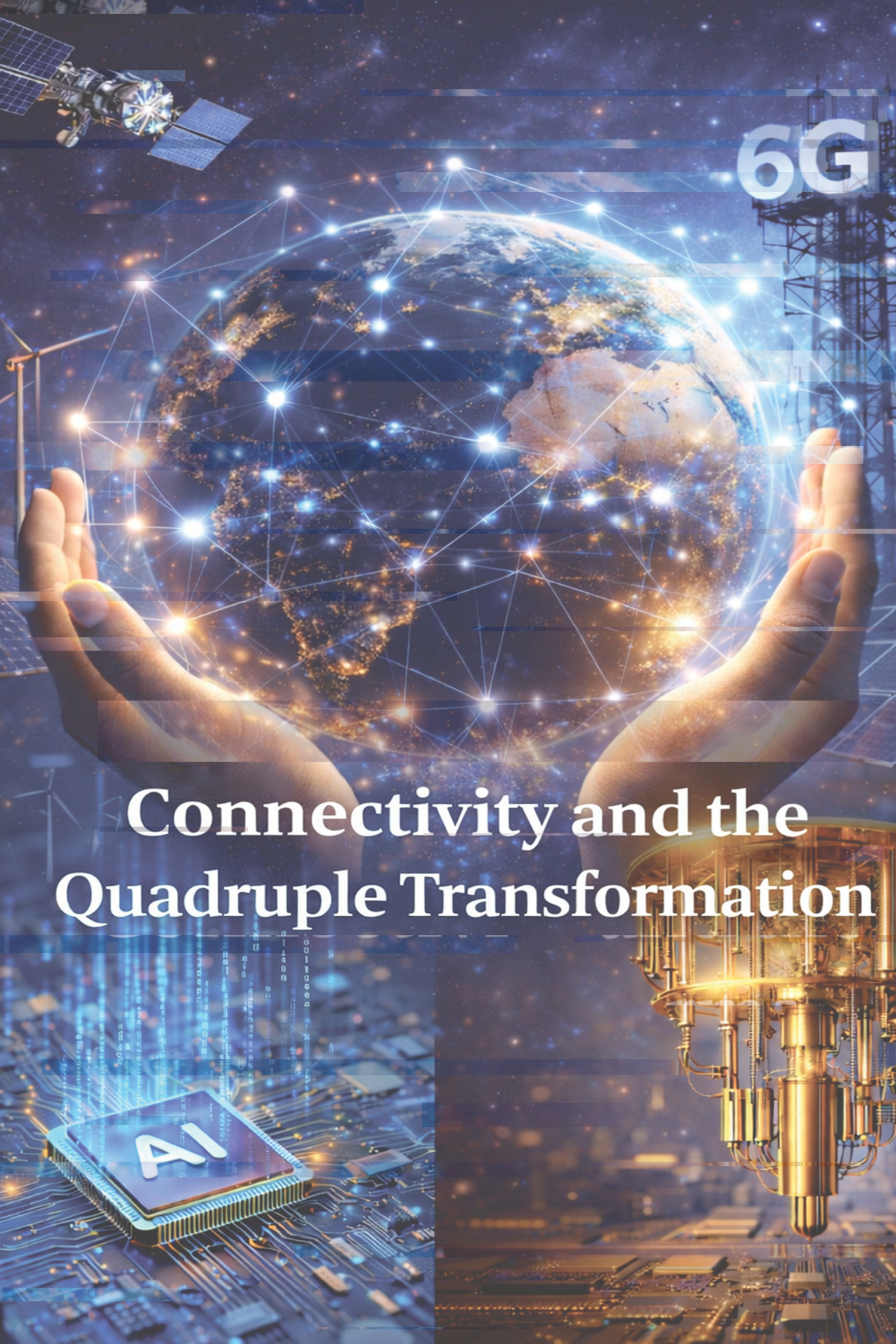
What makes this moment different is that four forces are converging at the same time, reshaping what connectivity is and what it means to lead in the connected world — these are the “quadruple transformation of connectivity:”
The rise of AI and AI-native networks
The leap toward 6G and satellite-integrated infrastructure
The disruptive promise of quantum technologies
The urgent drive for sustainability at every layer of the telecom ecosystem
Together, these shifts are rewriting how networks are built and operated — and raising new expectations for leadership, responsibility, and competitiveness.
From pipes to intelligence: AI-native networks
For decades, telecom networks were engineered for scale, reliability, and speed. Intelligence sat at the edges — in devices and applications — while the network itself was expected to be stable and predictable.
That line is blurring fast.
AI is no longer simply running on networks; it’s increasingly embedded inside them. Operators are using AI to anticipate failures, manage traffic dynamically, and reduce energy usage without sacrificing service quality.
Vodafone, for example, has used machine learning to automatically power down or “sleep” parts of its radio access network during off-peak hours, lowering energy consumption while maintaining performance.1 Nokia’s MantaRay analytics platform is also being deployed by tier-one operators to predict congestion, automate fault resolution, and reduce truck rolls — which saves cost and lowers carbon emissions at the same time.2
Meanwhile, hyperscalers like Google, Microsoft, and Amazon are reshaping the underlying infrastructure required to run AI at scale — and that infrastructure increasingly looks like telecom. Microsoft’s multibillion-dollar partnership with OpenAI isn’t only about models; it’s about the physical backbone required to train and deploy them: custom silicon, high-speed optical networking, and distributed compute placed closer to users to reduce latency.3
All of this is pushing the industry toward what many now call AI-native networks — systems that don’t just carry data but learn from it, adapt to demand patterns, and continuously reconfigure. That changes the operating model. It also changes the power dynamics.
Telecom companies themselves are becoming AI companies — not by abandoning connectivity, but by reinventing it. AT&T’s collaboration with NVIDIA to embed AI into radio and core networks is a signal example, applying AI to spectrum utilization, predictive maintenance, and performance optimization for enterprise and industrial customers.4
But once intelligence is inside the network, governance becomes unavoidable. Who controls the data flowing through these systems? Who owns the models trained on it? What does transparency look like when network decisions are automated? These aren’t engineering questions anymore — they’re board-level, regulatory, and geopolitical issues that will shape trust and competitiveness in the global digital economy.
6G, space, and the new global network fabric
If 5G was about connecting everything on Earth, 6G will be about connecting everything — everywhere.
6G research is already underway across the United States, Europe, China, Japan, and South Korea. And the ambition is larger than incremental speed gains. 6G is expected to integrate terrestrial networks with satellite constellations, airborne platforms, and sensing technologies — creating a layered communications fabric that’s more global, more resilient, and far harder to disrupt.
Low-Earth orbit satellite systems are rapidly becoming central to that fabric. Starlink, Project Kuiper, and OneWeb are expanding broadband access to regions where fiber is unrealistic and towers don’t make economic sense — rural communities, islands, remote industrial sites, and disaster-prone areas.
Ukraine demonstrated the strategic implications in real time. Starlink’s role in maintaining connectivity during wartime — for communications, logistics, and continuity of operations — underscored how satellite connectivity is now a geopolitical asset, not a niche solution.5
Iran offers a different lens: satellite services have become politically contested infrastructure. Citizens and activists have used satellite internet to bypass domestic restrictions, while the state has tried to jam or limit access — a reminder that space-based connectivity is increasingly entangled with questions of autonomy and control.6
Traditional mobile operators are responding by partnering directly with satellite providers. T-Mobile’s collaboration with SpaceX to enable satellite-to-cell connectivity aims to reduce “dead zones” across large portions of the United States — not just for convenience, but for safety, resilience, and rural economic participation.7
The applications this enables go far beyond the smartphone era: extended reality, digital twins of cities
and factories, autonomous transportation systems, precision agriculture, and real-time industrial automation. Those use cases will require networks that are not only fast, but secure, resilient, and intelligent by design.
The bigger point is this: connectivity is now inseparable from national competitiveness, economic security, and defense strategy. Nations that lead in networks will shape leadership in AI, semiconductors, and next-generation innovation.
Quantum: Threats and opportunity
Quantum is approaching like a weather front: visible on the horizon, not fully here, but close enough that you’d be reckless to ignore it.
At scale, quantum computing could break many of today’s encryption methods — threatening global communications, banking systems, and critical infrastructure. That’s why governments and companies are racing to adopt post-quantum cryptography and modernize long-lived security systems before quantum hardware reaches maturity.
NIST’s work to finalize quantum-resistant cryptography standards is a milestone, because it signals that quantum risk has moved from theory to planning horizon.8
Quantum also opens doors. Quantum Key Distribution (QKD) promises encryption that can detect interception attempts. China has demonstrated satellite-based quantum communications via the Micius satellite, establishing secure links over long distances.9 Across the industry, companies like BT, Toshiba, and Huawei are experimenting with quantum-secure fiber networks, preparing for a world where trust and verification are increasingly quantum-enabled.
And beyond security, quantum computing may eventually transform the way networks are engineered — optimizing spectrum allocation, modeling traffic, and improving routing efficiency at scale.
The challenge for leaders is straightforward: prepare for disruption, invest in resilience, and avoid a security scramble later that could have been prevented now.
Sustainability: The moral and market imperative
No discussion of connectivity is complete without confronting sustainability, because the digital world isn’t weightless — it runs on electricity.
Telecom networks are energy-intensive systems. Data centers, cell towers, and fiber infrastructure collectively consume enormous amounts of power, and that footprint will grow as AI workloads, streaming, and connected devices proliferate. A single hyperscale AI data center can draw as much electricity as a small city. Meanwhile, 5G densification — and the architecture required for 6G — means more towers, more edge sites, and more sensors embedded into physical space.
That creates a paradox: connectivity is essential to decarbonization, yet digital infrastructure is one of the fastest-growing sources of electricity demand. The industry can’t rely on marginal efficiency gains alone; it has to rethink architecture — from chip design to cooling systems to network topology — so scale doesn’t automatically mean scale in emissions.
Encouragingly, leading operators are taking action. Telefónica, Orange, and Deutsche Telekom have set net-zero targets and are investing in renewable energy, smarter equipment, and AI-driven energy management. Ericsson has redesigned its latest generation of base stations to reduce power consumption by up to 40% versus prior models, making sustainability an engineering requirement rather than a regulatory afterthought.10 Governments are also pushing in the same direction: the European Union’s Green Deal positions digital infrastructure as an enabler of decarbonization through smart grids, transportation optimization, and energy-efficient manufacturing.11
Connectivity is part of the climate challenge — and one of the most powerful tools we have to solve it. Leaders who understand both sides of that equation will be the ones who earn trust and legitimacy in the decade ahead.
Connectivity as sovereignty
Perhaps the most profound shift of our time is that connectivity has become sovereignty-critical infrastructure.
The semiconductor shortages during COVID exposed how fragile global supply chains truly are — and how quickly a disruption in chips cascades into industry, defense, healthcare, and telecom. In response, governments are investing heavily in domestic capacity. In the United States, the White House has framed CHIPS Act investments as central to rebuilding semiconductor manufacturing and strengthening national resilience.12 Europe has taken its own strategic posture through the European Chips Act framework.13
At the same time, control over advanced networks, satellite systems, and AI infrastructure is now widely viewed as a matter of national security. Competition is intense — and unavoidable. But interdependence hasn’t disappeared. Climate resilience, cybersecurity, and pandemic preparedness require interoperability and shared technical standards.
The future of connectivity will be shaped not only by engineers, but by diplomats, regulators, and multilateral institutions. In other words: this is no longer a purely commercial story.
Leadership for a connected world
Having spent more than three decades at the intersection of telecom, technology, and governance, I believe this moment demands a different model of leadership.
Executives must look beyond quarterly outcomes and consider the long-term societal impact of digital infrastructure. Boards must treat cybersecurity, AI governance, sustainability, and digital inclusion as strategic priorities — not peripheral risks. Cross-sector collaboration is essential, because no single company or country can navigate this transformation alone. Alignment between telecom operators, cloud providers, governments, academia, and civil society is not idealism; it’s risk management.
And we cannot ignore inclusion. Connectivity must narrow global divides, not widen them. The benefits of AI, 6G, and quantum must reach underserved communities as well as major cities.
A new mobile century
We are living through the most consequential technological transition since the birth of the internet. Connectivity is no longer a utility. It’s the foundation of innovation, democracy, security, and economic opportunity. The convergence of AI, 6G, quantum, and sustainability is creating a new era — and it’s already underway.
The decisive question is whether leaders — in business, government, and society — will meet this transformation with vision, responsibility, and courage. If we get it right, the next Mobile Century will be more connected, more intelligent, more sustainable, and more equitable than anything before it. If we fail, we risk fragmenting the digital world and deepening global inequality.
The stakes could not be higher — and the opportunity could not be greater.
- Vodafone Group. “Energy efficiency and AI in mobile networks.” Vodafone Sustainability Report, 2024. ↩︎
- Nokia. “Nokia MantaRay Network Analytics and AI for autonomous networks.” Nokia white paper, 2024. ↩︎
- Microsoft. “The Microsoft–OpenAI infrastructure partnership.” Microsoft blog, 2023–2024. ↩︎
- AT&T & NVIDIA. “AI for network optimization and automation.” Joint announcement, 2024. ↩︎
- SpaceX Starlink in Ukraine. Multiple reports from Reuters, BBC, and U.S. Department of Defense, 2022–2024. ↩︎
- Iran satellite internet access and jamming reports. The Guardian and Reuters, 2023–2024. ↩︎
- T-Mobile & SpaceX Direct-to-Cell partnership. T-Mobile press release, 2023–2024. ↩︎
- NIST Post-Quantum Cryptography Standards. NIST announcements, 2024. ↩︎
- China Micius Quantum Satellite. Nature and Chinese Academy of Sciences publications, 2016–2024. ↩︎
- Ericsson energy-efficient 5G/6G hardware. Ericsson sustainability and technology briefings, 2024. ↩︎
- European Union Green Deal and Digital Strategy. European Commission, 2023–2024. ↩︎
- The White House. Fact Sheet: CHIPS Act Investments in U.S. Semiconductor Manufacturing, 2024 ↩︎
- European Commission. European Chips Act: Strategy and Funding Framework, 2023–2024. ↩︎

Michele Merrell is a senior Independent Director and global executive with more than 25 years of leadership experience across industries including telecommunications, broadband, cybersecurity, digital infrastructure, and technology-enabled manufacturing environments. She brings over twelve years of public and private company board service, with deep expertise in corporate governance, technology and innovation oversight, audit and risk and executive compensation.
Ms. Merrell currently serves as an Independent Director of Cable Bahamas and Aliv Mobile, two nationally critical regulated telecommunications providers, where she chairs the Nominating & Corporate Governance Committee and the Technology & Innovation Committees. She has extensive experience guiding boards and management teams through leadership transitions, organizational change, and governance maturation. Previously, Ms. Merrell also served for six years as an Independent Director of Summit Broadband, a regional fiber infrastructure operator, where she oversaw governance during a period of rapid expansion, multiple acquisitions, and the company’s successful $301 million sale in 2020.
In addition to her board work, Ms. Merrell is the Founder and Principal of Aethra Global, where she serves as a strategic advisor to organizations navigating transformational change, digital modernization, commercialization strategy, and enterprise AI adoption. Her advisory work spans technology, cybersecurity, infrastructure, and emerging-technology companies, with a focus on scalable growth, operational resilience, and market positioning.
Ms. Merrell’s executive background includes senior leadership roles at Brightstar Corp. (a $6.8B global enterprise operating in 52 countries), US Cellular (Fortune 500, $3.5B), Tyco International/Sensormatic ((TYC, $22B), CSPI (NASDAQ), Thales e-Security (THLLY, $21B), and other high-growth start-up organizations. Throughout her career, she has influenced multi-hundred-million-dollar P&Ls, led global go-to-market strategies, supported M&A and IPO readiness.
Ms. Merrell holds an MBA, summa cum laude, and is a National Association of Corporate Directors Board Leadership Fellow. She is a member of Women Corporate Directors, and Extraordinary Women on Boards, and has received numerous national and international leadership awards recognizing her impact in business, entrepreneurship and community leadership.



The divergent approaches to quantum safe networks and their impact on the future of telecommunications security
Sheena Jacob, Partner, CMS Singapore Lisa McClory, Of Counsel, CMS UK The global...

The role of energy in the AI revolution
Carla Cico, GTWN international board member; TMC Editor-in-chief Energy and human civilization are...


