
Hotspots: Crises and opportunities of the future forward
March 3, 2026
Rosalia Gitau, Esq. , Co-founder and CEO, Bixie; GTWN Secretary General
2026 kicked off with a peculiar social media trend. Rather than usual provocative content to drive engagement, billions of users across platforms worldwide shared who they were with, what they were wearing, and how they were feeling in 2016.
It seemed innocuous enough: a bit of nostalgia to lessen the pressure of ‘new year, new me’. But as the photos streamed in, it started to take a different turn: women marching in pantsuits, men head to toe in the Union Jack, the Zika virus poking holes in travel plans. Unbeknownst to us, the seeds of today were planted a decade ago – and it’s important that industry leaders position themselves for the next ten. As an attorney, economist, founder and analyst, here are the Hotspot issues of 2026 that will impact products, markets, customers, and market moves over the next 10 years.

People, Planet & Places: We will reach 9 billion people on earth, with Sudan, Niger, Somalia, Angola, and the Central African Republic experiencing the fastest population growth. English, Mandarin, Hindi, Spanish and Indonesian will be 5 most spoken languages in 2036, and we will likely breach the 1.5 Celsius threshold, surpassing the point of no return for irreversible and catastrophic climate related challenges to our planet and its people.
Slop & Signoff: As AI occupies an increasing amount of content online – upwards of 40% currently estimated on the Big 4 social media platforms – social media firms are losing users’ attention. Two things are occurring as a result: customers across industry are signing off and away from online marketing, and ‘editorials’ or interlocutors of trust are rising in prominence, to help people discern ‘A.I. slop” from content which makes sense. Trust and Truth are premium.
Space: 2026 marks the year that astronauts will return to the moon (lunar flyby) with the Artemis II mission to kick off the year in February, and other critical missions planned this year to support Moon and Mars ambitions alike. But similarly, it’s the year that Space will become a part of the earth to meet our needs here, including data centers in space, and space as theater of war/defense, turning our relationship with space from remote to imminent.
K-Shaped Economy: 10% households account for 50%+ of spend in several OECD countries. This wealth disparity has skyrocketed since COVID and shows no signs of slowing. What this means is that there are two discernible markets for goods and services, with those who can afford to partake in the economy determining the services and offerings in the market, and vice versa.
Gold: As confidence in global stability weakens, the price of gold has surged in the past 12 months. Not since 1979 and the oil crisis has such a surge been recorded. As solutions to the underlying drivers for this price hike prove elusive and manifold, this will have an impact on costs associated with globalized trade and services.
Baby Boomers & the Great (Gender) Wealth Transfer: Upwards of 70-80% of Baby Boomers are expected to be alive in 10 years, and the majority (64%) will be women, the principal inheritors of the long-anticipated Baby Boomer wealth transfer. Goods & services across industry have an opportunity to shift focus towards a more wealthy, elderly and female market , notably in a K-shaped economy (see above).
Plus ça change?
In 2016, the biggest companies in the world by market cap were largely tech and oil companies. In 2026, the biggest companies in the world by market cap are still largely tech and oil. The distinction lies in the revenue: the last ten years has seen a shakeup and shakeout of companies and the goods they are able to sell. Car companies, brick and mortar retailers and telcos were bumped off the top ten and replaced by companies which could transport their physical offerings onto and through the digital space. In retrospect, the ten most significant global events at that time were precursors to disrupting globalizations with Brexit, the US elections, the fall of Syria, and the demise of the TransPacific Partnership, arguably placing a high priority on the need for digital space whilst physical spaces looked inward– a trend we saw accelerated during the Covid pandemic, where our physical space was in many cases winnowed down to our homes.
As we see the current Hotspots pointing to a shift away from the post-war order and the globalization it facilitated and accelerated through digital, we are now experiencing a shift in the geographical spaces where markets meet, and the tangibility of offerings available. The winners of 2036 will meet this moment.
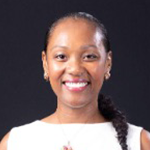
Rosalia Gitau, Esq. is a FinTech Executive, Attorney, Author, and Humanitarian. She is the co-founder and CEO of Bixie, an award-winning Financial Technology company for women recognized as a Top FinTech in company by The Manila Times, The Manila Bulletin, 1Million Startups, the Financial Alliance for Women, and Women’s World Banking ( Bixie Press Pack available here).
Rosalia has over 15 years of international law, diplomacy and finance in Asia, Africa, the Middle East and the Americas with the United Nations, Alibaba, Shearman & Sterling, LLP, and the governments of the USA, Liberia and Sierra Leone. She is the author of Hotspots, the novel for which she was a PEN Award nominee and the co-founder of the Humanitarian Women’s Network (HWN), the largest global network of women in international affairs.
Rosalia is a Visiting Fellow at Zinc Venture Capital, a United Nations University and Brookings Institution scholar and sits on the Boards of HWN, and the Global Women’s Telecom Network. She holds a BA from UCLA, an MSc from the London School of Economics and J.D. from New York University School of Law. Rosalia is a world-record holding mountaineer, champion fencer and runner living between Thailand and Australia with her husband, daughters and labradors. She hails from the Philippines and Kenya, by way of California.


Platinum Sponsor: CMS
CMS is proud to continue our Platinum Sponsorship of the GTWN’s flagship publication...

The telecom power shift no one is ready for: Why owning the network no longer means owning the market
Isabelle Paradis, President and Founder, HOT TELECOM; GTWN International Board Member Telecom has...


